GS Labloure — Solutions for Excellence in Clinical Research
contact@labloure.info

Bioanalytical AI & Lab Operations

Concept & initial development

Bioanalytical AI.
A more connected lab.

We are developing a platform that brings laboratory operations and AI-assisted scientific support into one connected workflow—shaped around the practical needs of bioanalytical teams.

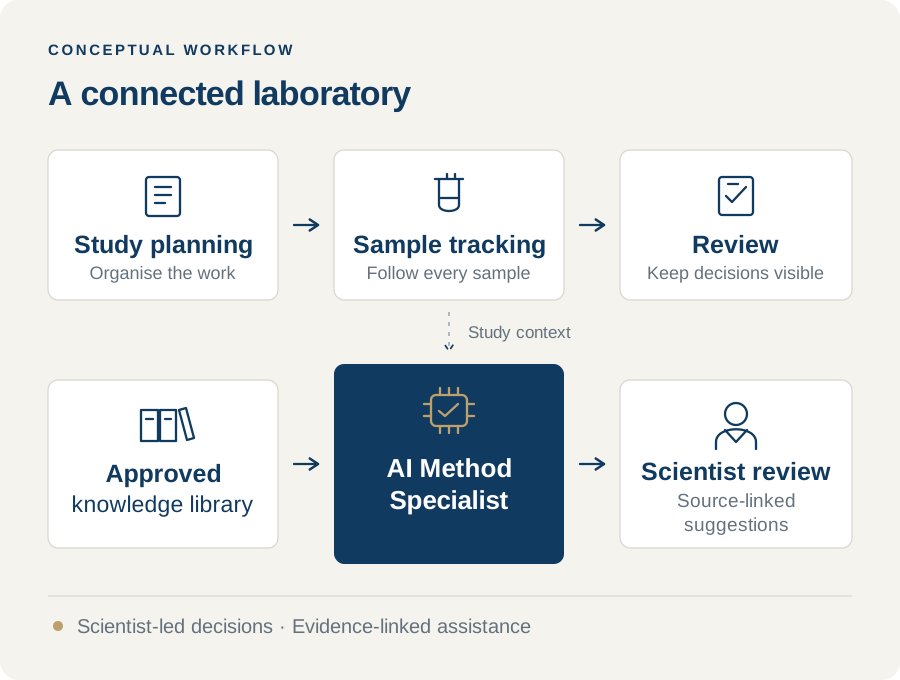
Conceptual workflow connecting study planning, sample tracking and review with an AI Method Specialist and approved knowledge sources
Conceptual workflow · Planned capabilities
Grounded in scientific practiceDesigned around expert reviewOpen to collaboration

The idea, in plain terms

Less fragmented work.
More connected knowledge.

A laboratory manages much more than analytical results. Teams coordinate studies, track samples, maintain methods, book instruments and search for relevant scientific information—often across different systems.

Our planned platform brings these activities together. One layer organises laboratory work. A second layer—the AI Method Specialist—would help scientists explore method-development and troubleshooting questions using relevant, approved knowledge.

The goal is to support scientific judgement with better context, organisation and traceability.

Two connected layers

Operations on one side.
Scientific assistance alongside.

A shared foundation for everyday laboratory work and the knowledge that supports it.

01

Lab Operations

A planned workspace for studies, samples, methods and resources. Laboratory information management (LIMS) would organise records and sample histories; resource-planning functions would help coordinate people, instruments and materials.

02

AI Method Specialist

A planned scientific assistant that considers the analyte, sample matrix and analytical challenge, retrieves relevant reference material, and offers source-linked suggestions for a scientist to assess.

Planned capabilities

Built around how laboratories work.

These capabilities describe our development direction. The initial focus is small-molecule LC–MS/MS workflows, with broader assay support considered for later stages.

01

Study coordination

Organise study milestones, responsibilities, protocol versions and progress in one shared view.

02

Sample traceability

Follow sample identifiers, storage locations, aliquot relationships and handling histories.

03

Methods & knowledge

Find relevant approved methods, SOPs, validation documentation and troubleshooting references.

04

Method exploration

Explore sample-preparation and chromatography questions in the context of the analyte, matrix and study.

05

Review & documentation

Support structured checks, traceable findings and recorded reviewer decisions.

06

Resources & collaboration

Coordinate analysts, instruments and materials with appropriate access and version histories.

A closer look at the AI

Find the relevant knowledge.
Then build the response.

Retrieval-augmented generation, or RAG, is a way to connect AI responses with a selected knowledge library.

The planned workflow would first retrieve relevant approved documents, then use that context to prepare a response with source references. Scientists would assess the suggestion and decide what to investigate or apply.

Source retrieval supports reviewability. It does not establish that an experimental recommendation is correct or that a method is validated.

  1. 01

    Provide the study context

    Describe the analyte, matrix, method and question.

  2. 02

    Retrieve relevant sources

    Find supporting material in an approved knowledge library.

  3. 03

    Prepare source-linked suggestions

    Connect possible next steps to their supporting references.

  4. 04

    Keep the scientist in control

    Review the evidence and make the scientific decision.

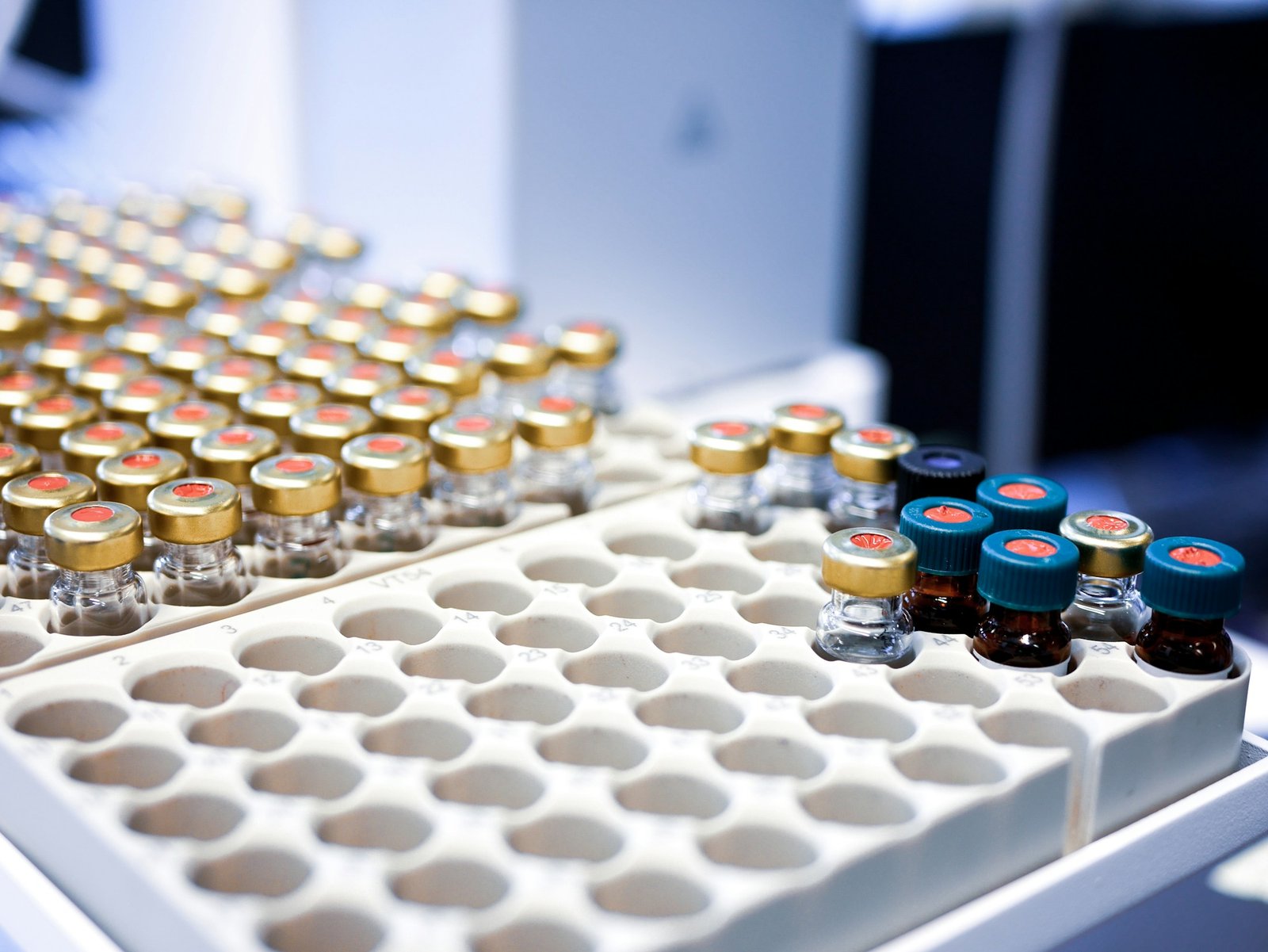
Laboratory sample vials arranged in an instrument tray
Representative laboratory photography · Julia Koblitz / Unsplash

Scientific expertise meets engineering

Shaped around real laboratory needs.

GS Labloure brings its bioanalytical and sample-preparation perspective to the initiative. The development direction combines that domain knowledge with specialist AI engineering.

Source traceability, controlled access, document versioning and appropriate handling of confidential information are design priorities. Their implementation and evaluation will depend on the intended workflow and customer requirements.

We welcome conversations with CROs and laboratory teams to help shape useful, reviewable workflows.

Our development collaboration

Domain knowledge.
Specialist AI engineering.

Developed in collaboration with our specialist AI technology partner, Mr Shabaz, an AI engineer from IIT Kharagpur.

Both initiatives are in concept and initial development. We are shaping their scope around practical scientific workflows and welcome conversations with interested teams.

A few useful answers

Understanding
the initiative.

Is this platform available today?
The initiative is at the concept, planning and initial development stage. You can request a demonstration to discuss current progress and the availability of a concept walkthrough.
What is the difference between LIMS and ERP?
A LIMS helps organise laboratory information such as samples, methods and records. ERP-style planning functions help coordinate resources such as people, instruments, materials and work.
Would the AI make final laboratory decisions?
Scientists would retain responsibility for experimental decisions, method validation and study acceptance. The planned AI assistance is intended to support their review and investigation.
Does Labloure already offer instrument integrations?
Instrument and existing-system connections form part of the wider development direction. Specific integrations and availability will be defined and evaluated during development.

Continue the conversation

Explore what this could
mean for your team.

Tell us about your workflow and request a demonstration or discussion of the initiative’s current progress.

Request a Demonstration

From Our Chromatography Specialists

Connect with us.

Search Labloure

ESC

Product Image

Product Image